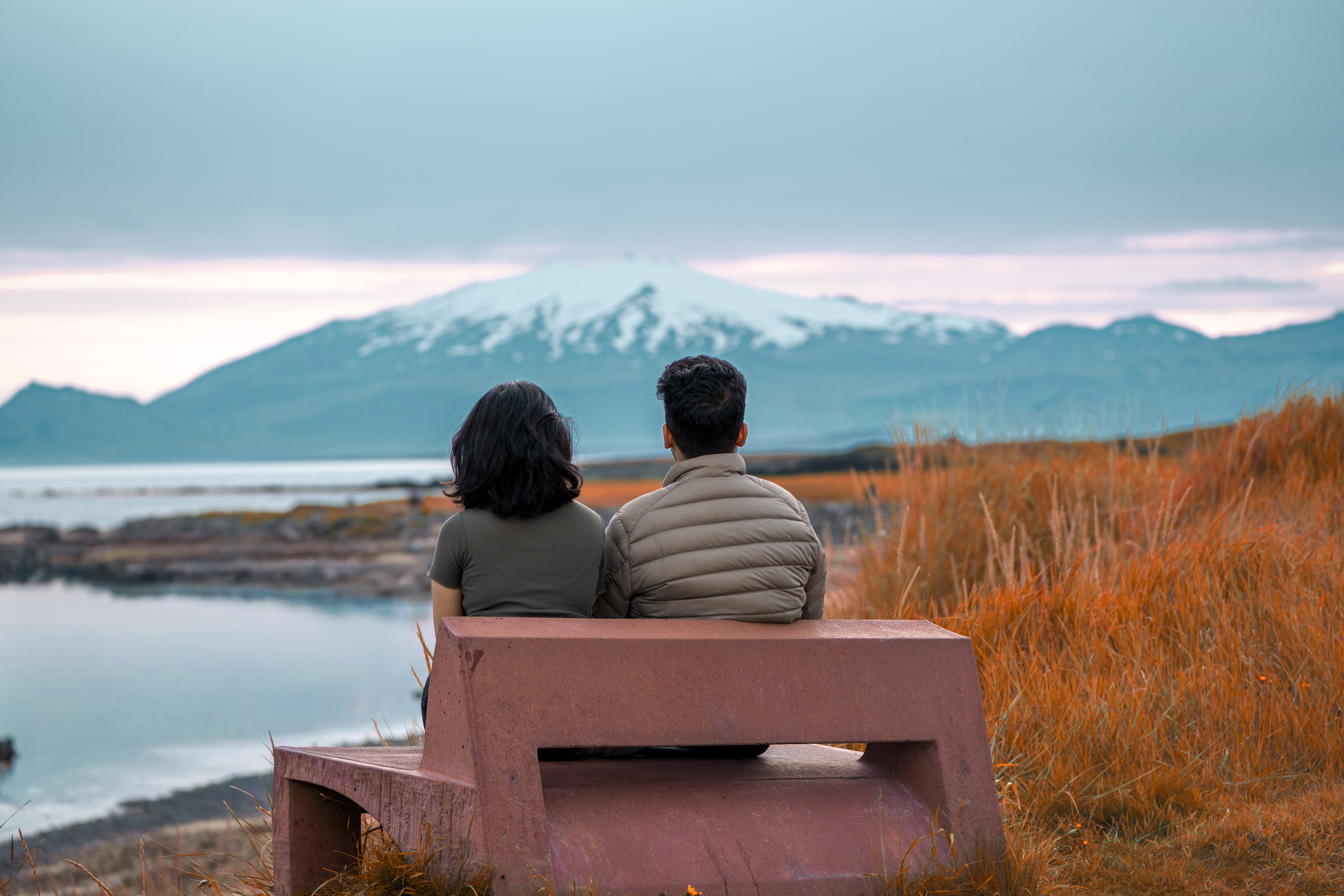
Iceland - A different planet
Ten days. Two thousand kilometres. One planet that felt like another.

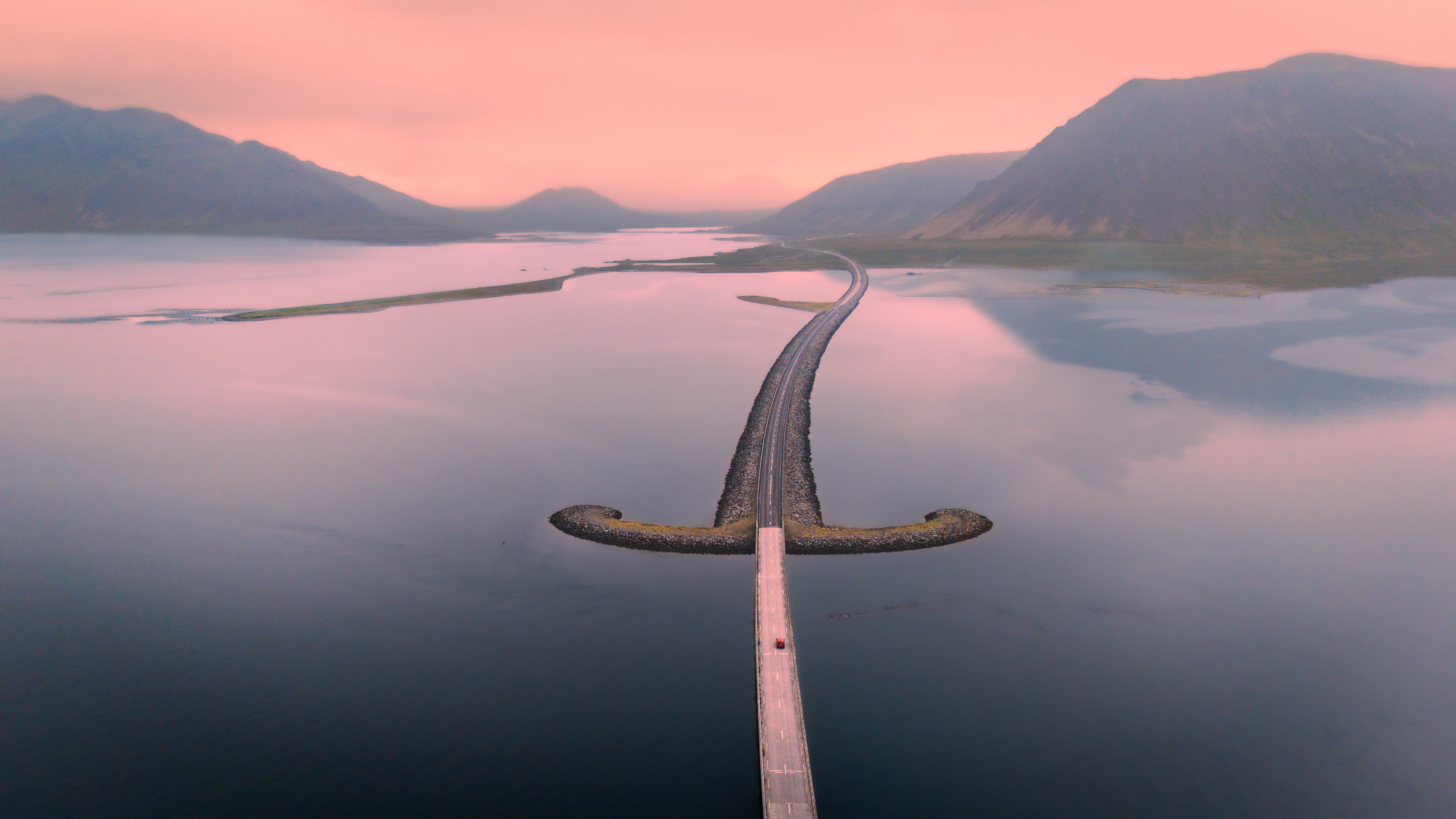
From up here, Iceland doesn't look real. A strip of land cutting through water so still it could be glass. Nothing to prove anyone has ever been here. From the ground, it hits differently.
The moment you land
Keflavík Airport is small and a little unremarkable. Then you step outside.
The cold hits first, not aggressive, just present, a reminder that you are somewhere with actual weather. Then the light. In July it has a particular quality, pale and flat and endless, bouncing off the lava fields like it doesn’t know where to settle. There are no trees. No skyline. No noise except the wind, which comes from somewhere impossibly far away.
Most of Iceland is experienced from the road. Long drives. Almost no one around. We drove the full Ring Road over ten days. Roughly 2000 kilometres. The plan was loose enough to breathe, a direction, not a schedule. What happened in between is the story.
Waterfalls, everywhere
Iceland doesn’t do waterfalls quietly.
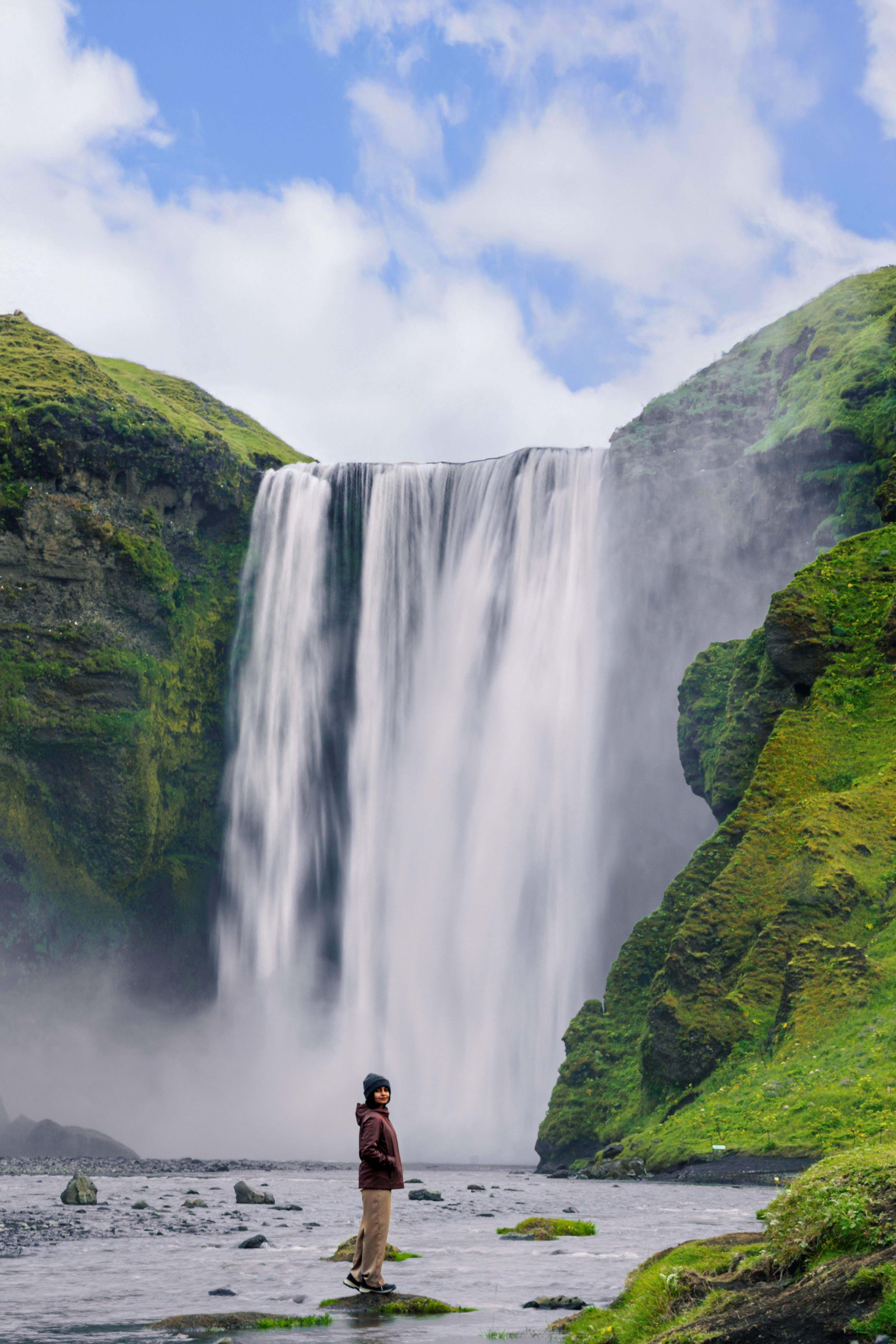
Skógafoss hits you from half a kilometre away. You feel it in your chest before you see it.
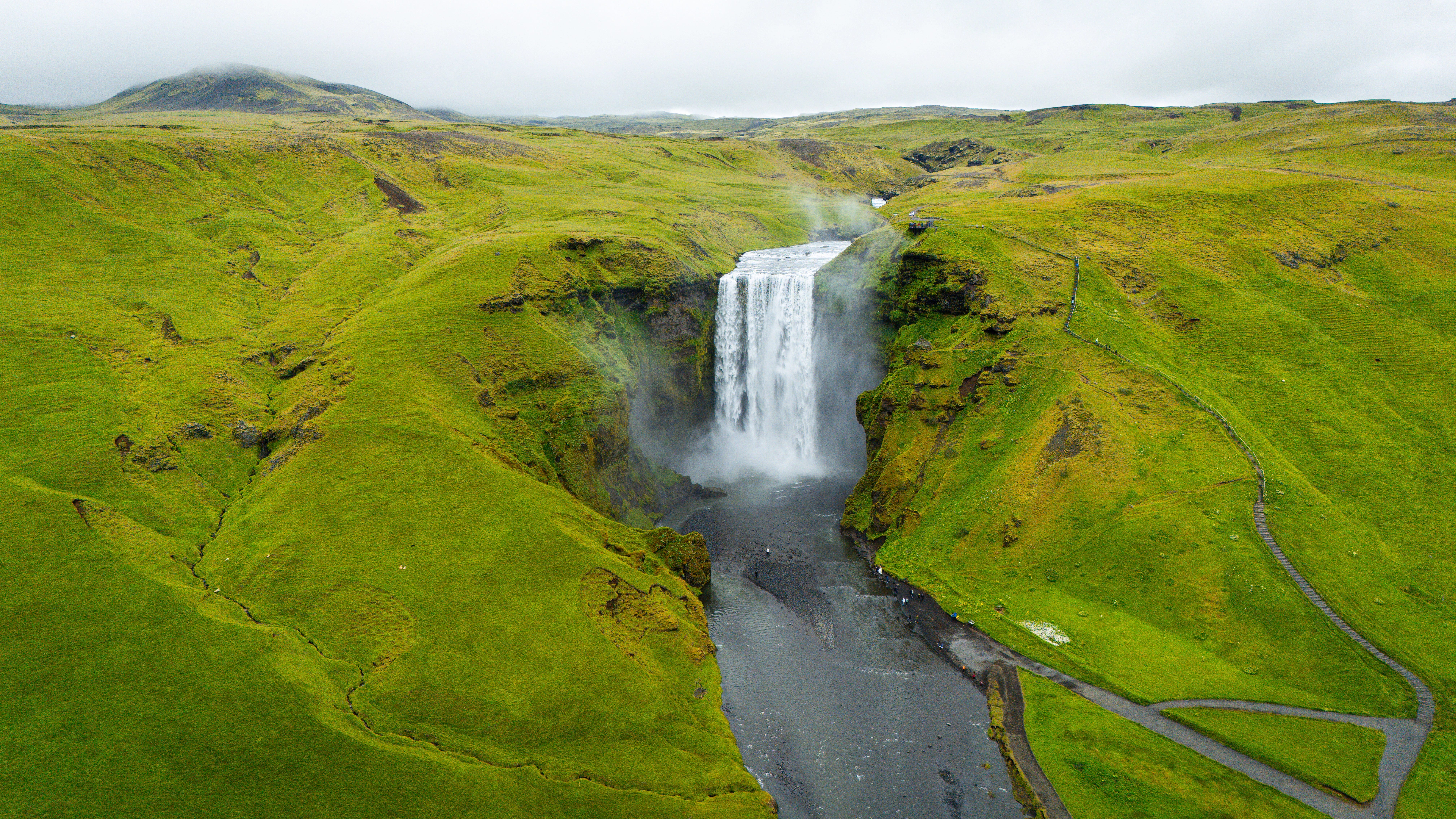
We couldn't climb the 370 steps to the top as it was getting late, so we sent the drone up instead. The view from above is the one the stairs were trying to get to.
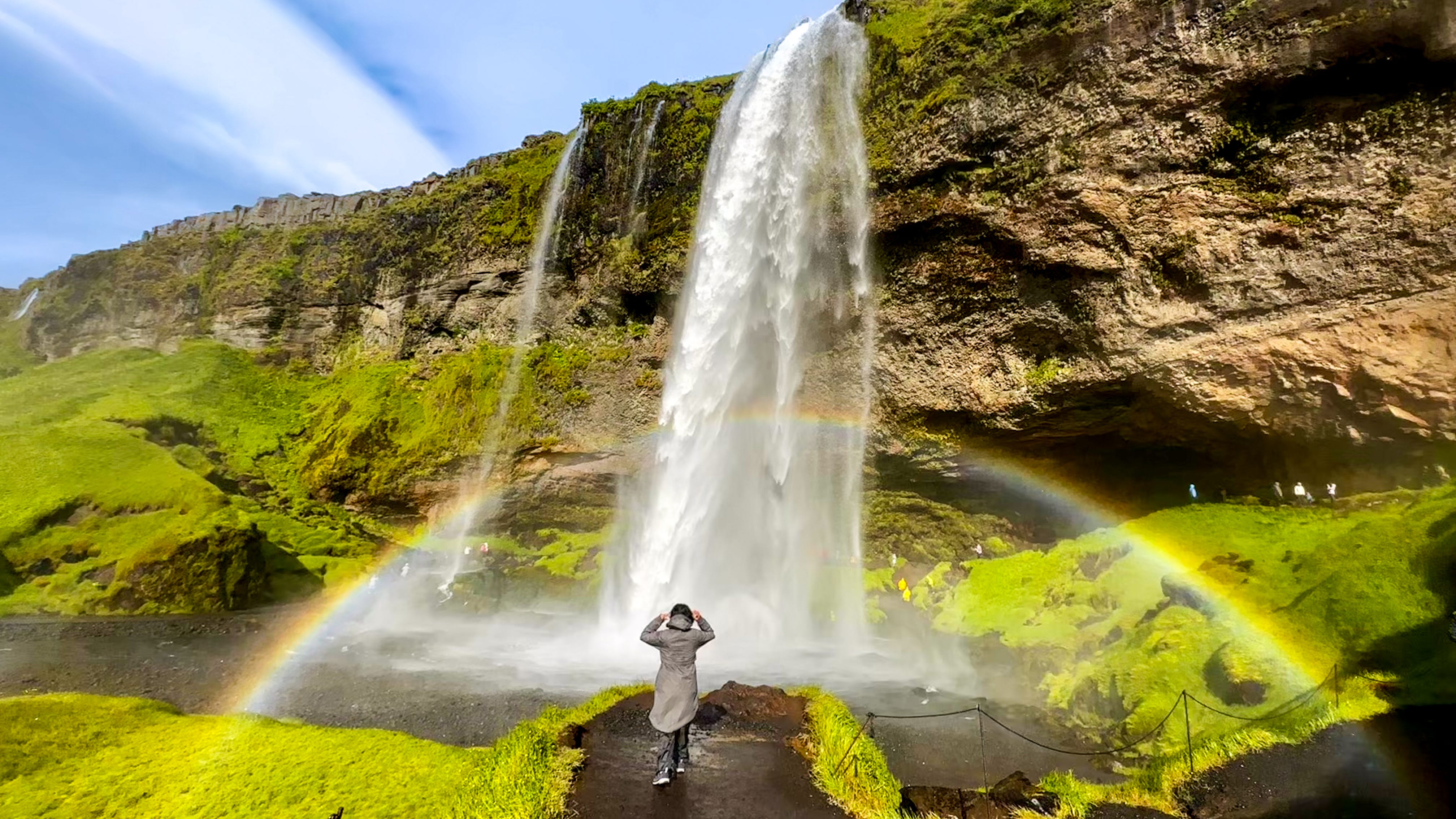
But the one that stayed with us was Seljalandsfoss. Because you can walk behind it. You pass through the curtain of water and suddenly you’re on the other side, looking out through a veil at the green valley beyond. The rainbow forms in front of you. The thunder is all around you. It’s one of those moments where your brain goes quiet because there’s nothing useful it could possibly add.
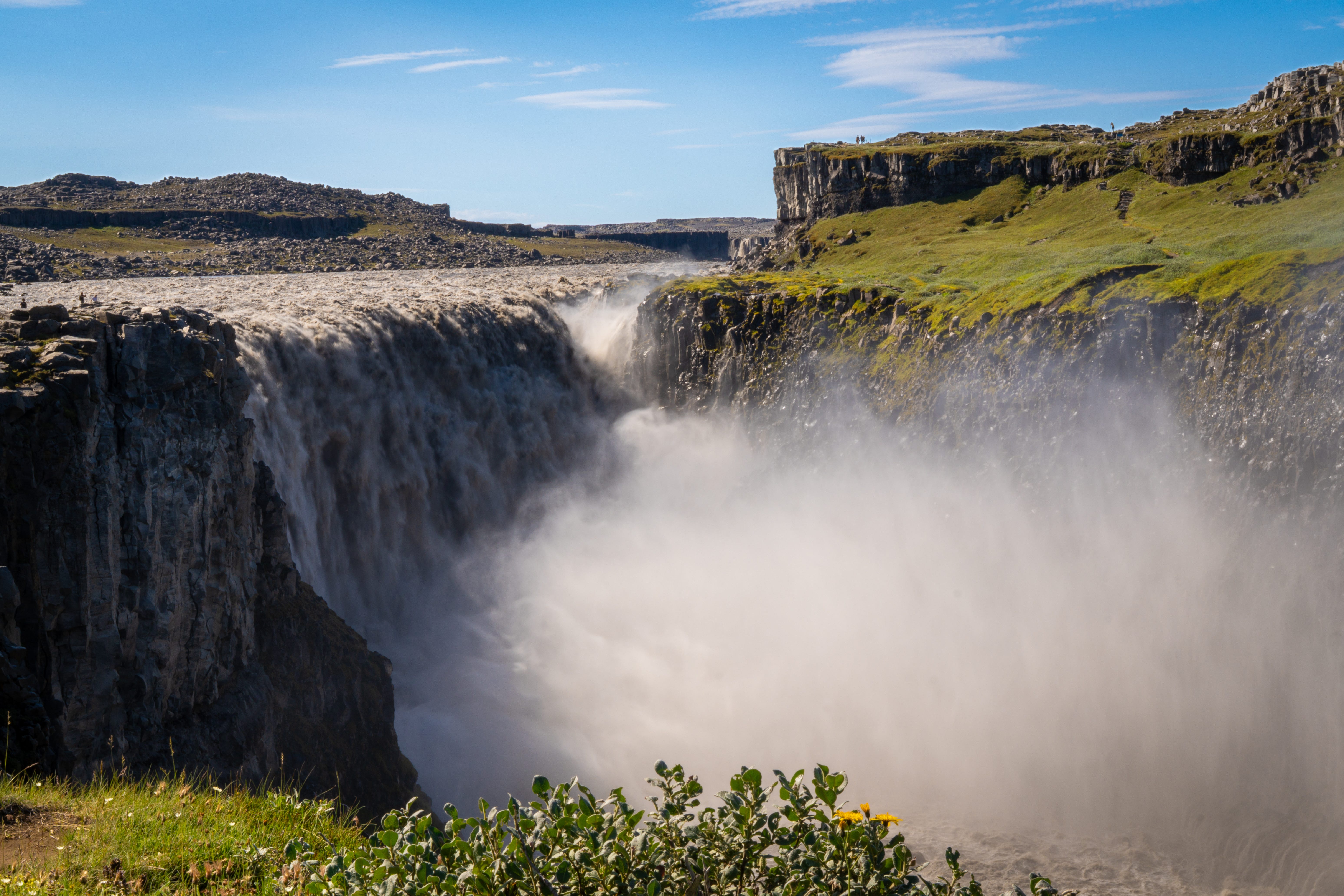
Further north, Dettifoss. The most powerful waterfall in Europe, and it looks the part. Raw, prehistoric, almost aggressive. Standing at the edge, the ground vibrates. The spray soaks your jacket before you've even reached the railing. There's no polish here, no viewing platform with Instagram lighting. Just an enormous amount of water falling off an enormous cliff, doing exactly what it's been doing for thousands of years.
We watched a full rainbow form in the mist below, not an arc in the distance, but right there in front of us, one step at a time, like it had been arranged just for us.


Fire under the ice
At some point you realise that Iceland is not a finished country. It’s still being made.
We hiked Hverfjall, a 2,500-year-old volcanic crater so perfectly formed it looks designed. From the top you can see the geology of the island laid out like a map: lava fields in every direction, steam rising from the earth, the lake below still and silver.


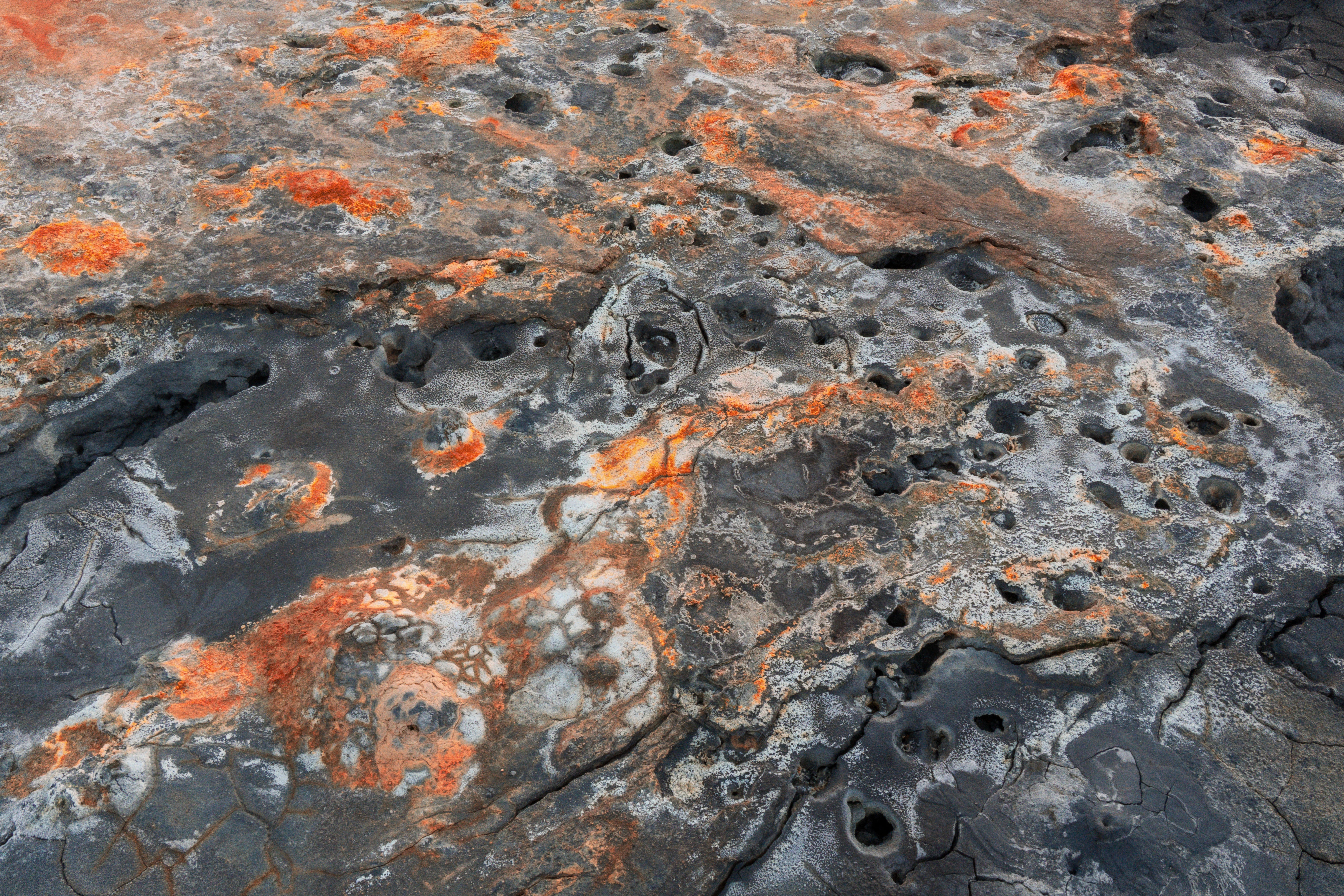
Nearby, Hverir. Mud pools bubbling with sulphur, the ground hissing, the whole landscape coloured in oranges and yellows that have no business looking this vivid. The smell hits you before anything else, hydrogen sulphide, rotten eggs, thick and inescapable. Your instinct is to step back. You don't. It's too extraordinary to leave.


The animals ran this place
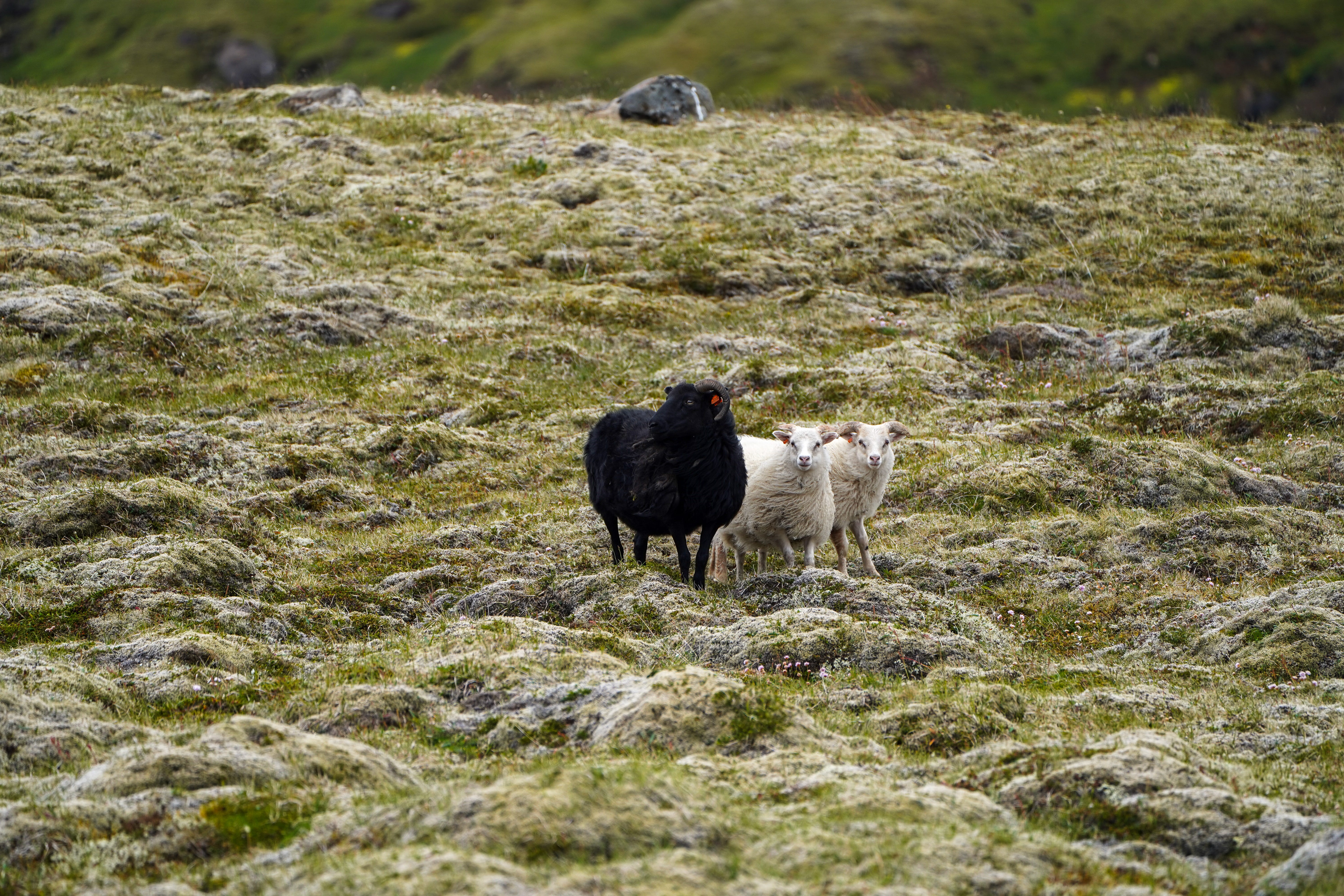
Nobody told us Iceland has more sheep than people. We found out ourselves, slowly, over several hundred kilometres of road where the fields blur into the tarmac and the sheep don't particularly care which side of the line they're on.
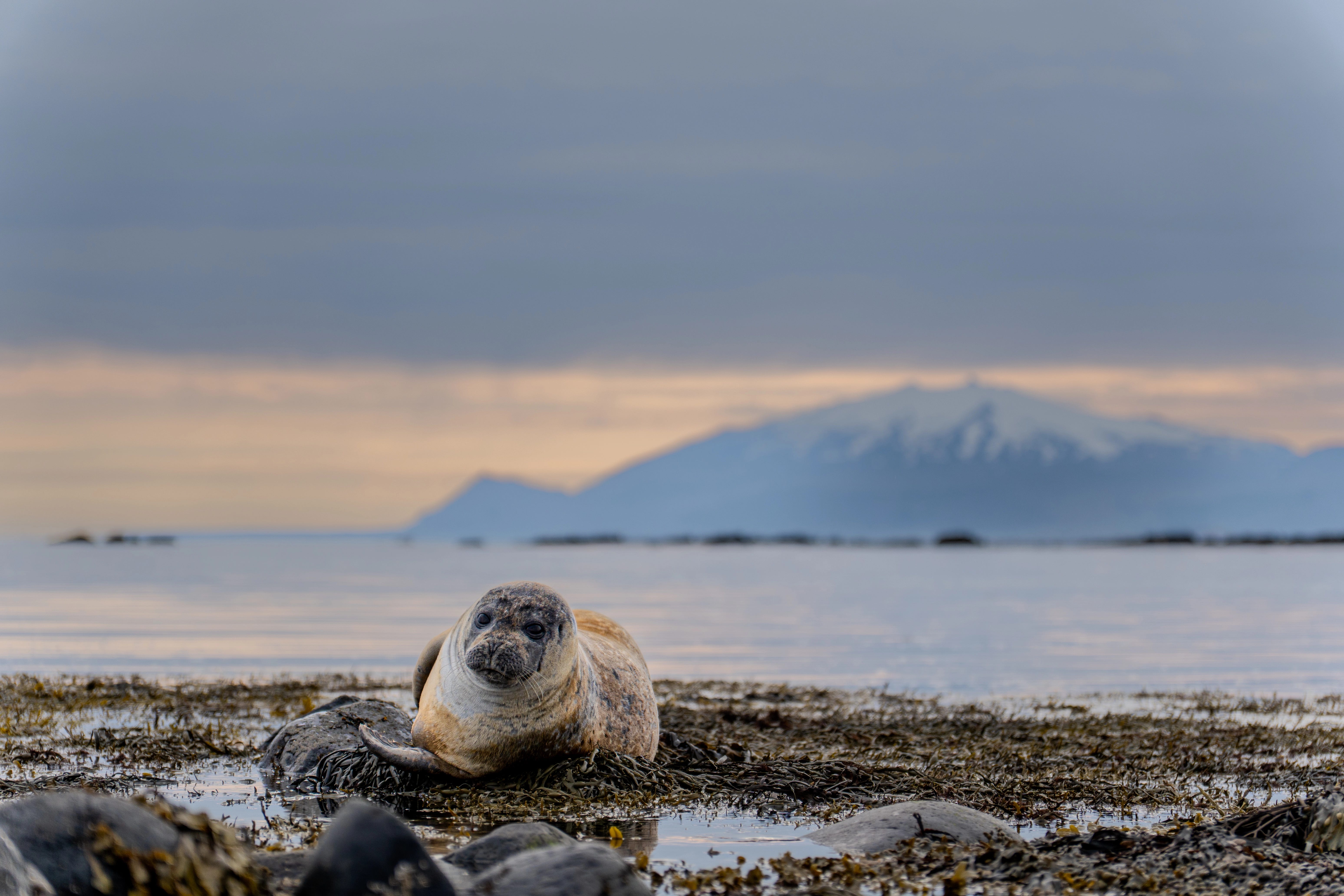
At Ytri Tunga Beach we walked the black beach and found we weren't alone. Seals, dozens of them, sprawled across the rocks like they owned the place, completely unbothered. One looked directly at us for a long moment with a kind of bored authority, then went back to sleep. We were on their beach.
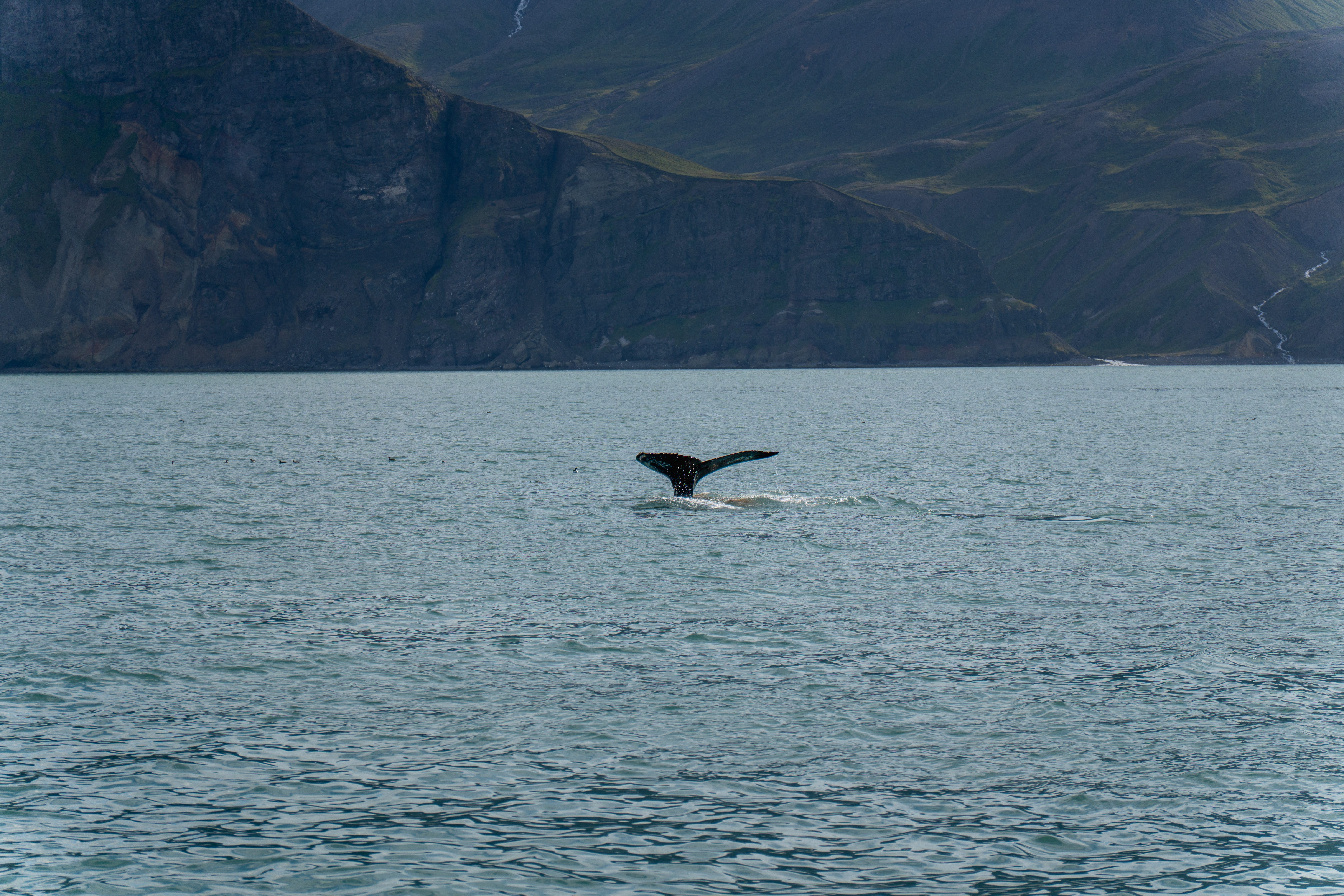
The whale watching out of Húsavík was something else entirely. We’d been warned it wasn’t guaranteed , sometimes they don’t show. They showed. A humpback, close enough that you could hear it exhale. That sound. Nothing prepares you for that sound. The whole boat went silent.
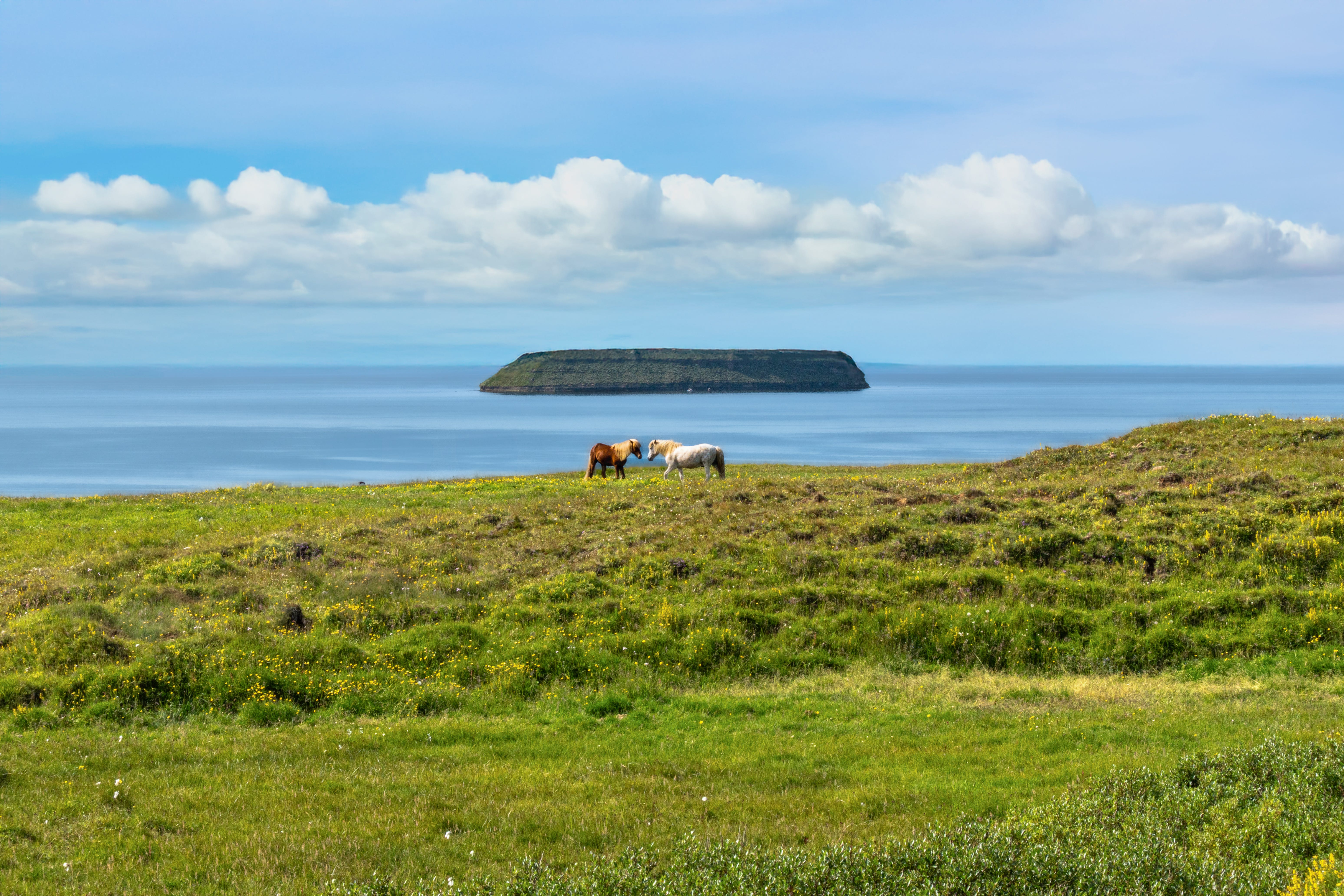
The Icelandic horse is its own thing entirely. Smaller than you expect, thick-maned, bred here for over a thousand years in complete isolation. Once one leaves the island, it can never return. We found two of them in a meadow above the coast, completely absorbed in each other, with Puffin Island floating on the horizon behind them like a painting. We stopped the car and just watched for a while. Some moments you don't photograph. Some you do, and the camera somehow gets it right.
Holding a glacier
Reynisfjara doesn’t welcome you so much as tolerate you.
The sand is genuinely, completely black, volcanic and fine and unlike anything your eyes expect a beach to look like. The waves come in fast and pull hard, and the warning signs aren’t decoration. We stood close enough to feel the spray and not a single step closer. Beautiful in the way that dangerous things sometimes are.
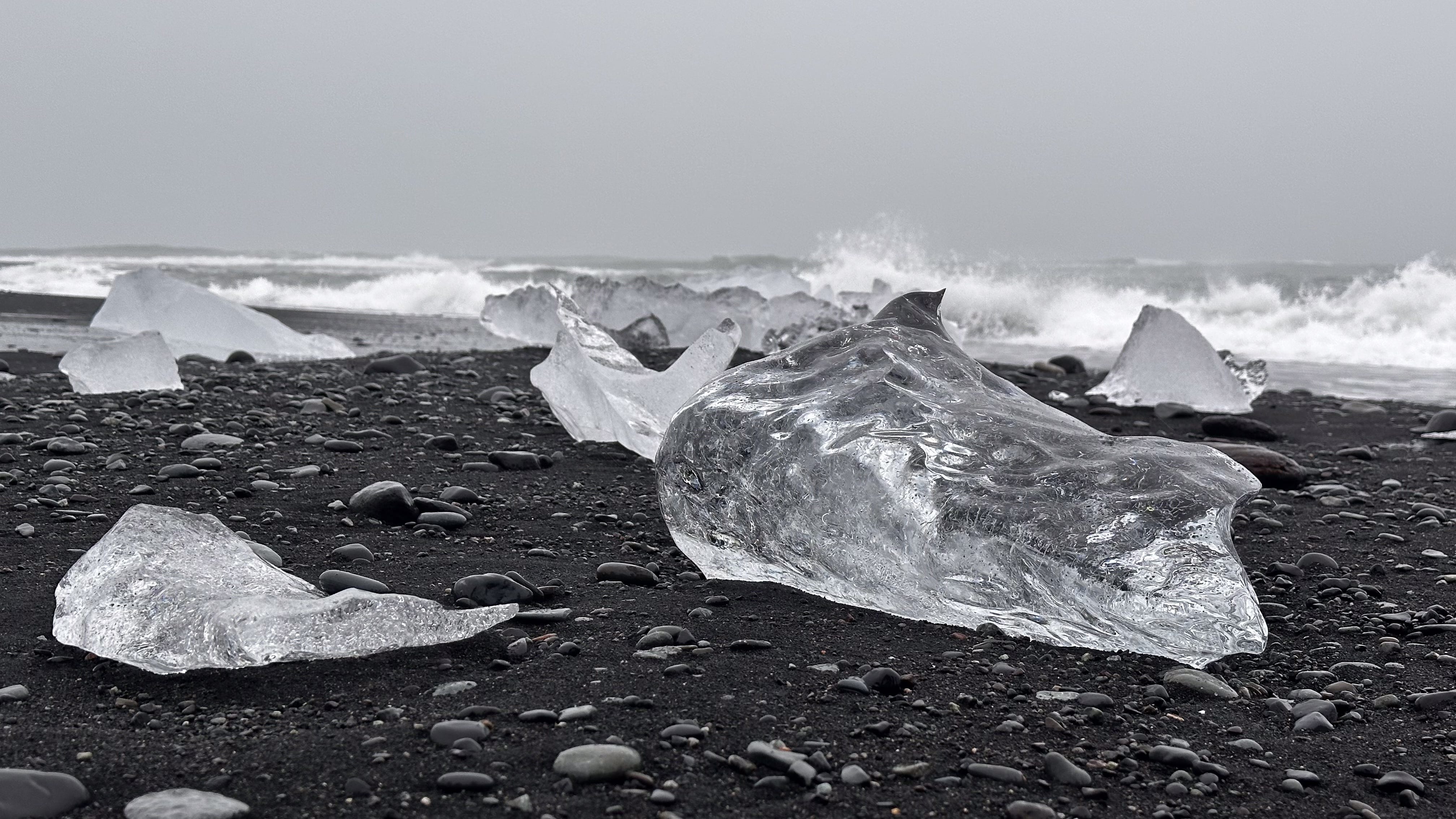
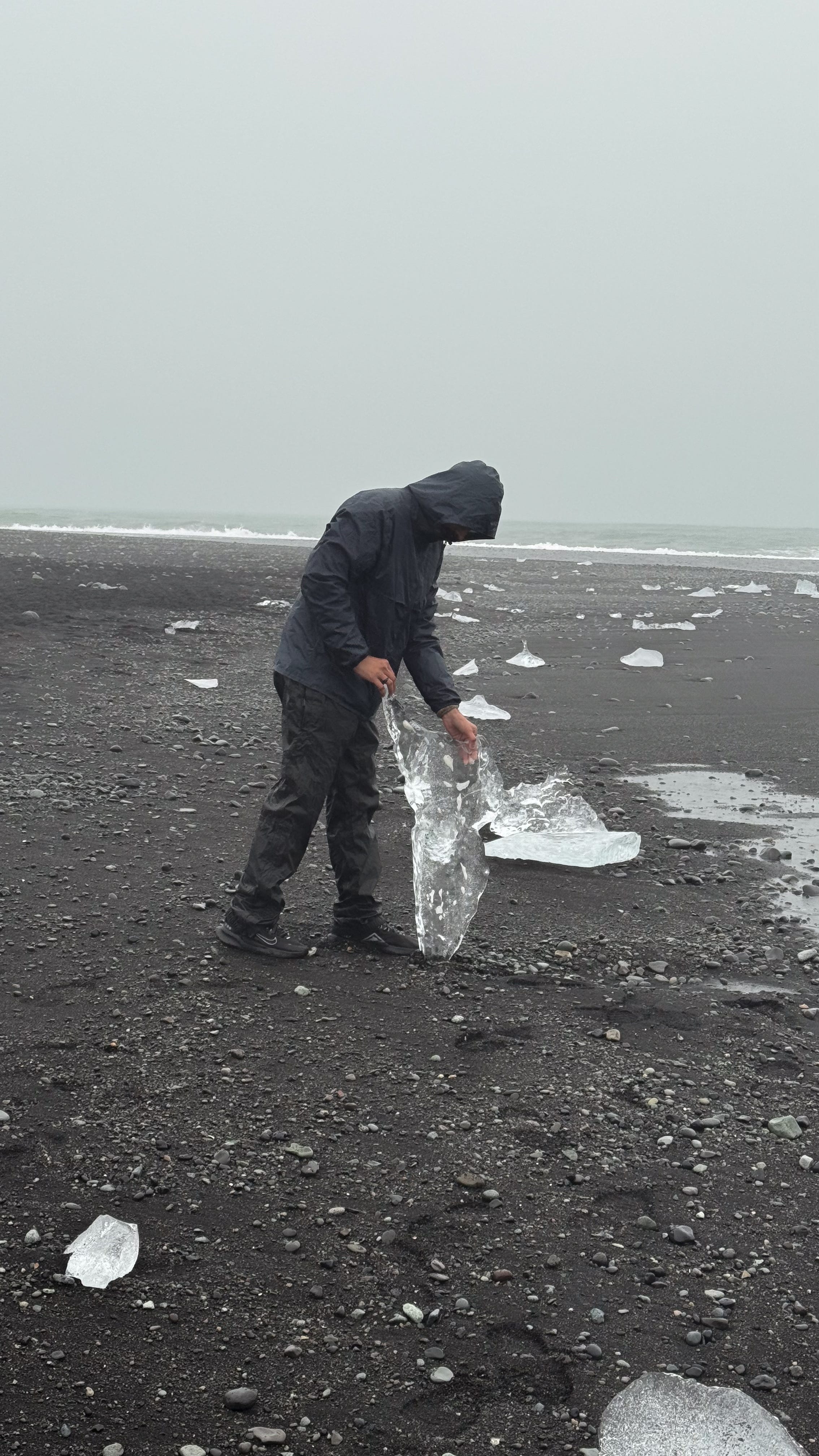
At Diamond Beach, glacial ice washes up on the black sand like scattered jewels, chunks broken off from the lagoon, each one a different shape, each one completely clear. I picked one up. It was heavier than I expected, and colder. Every photograph you take here looks black and white, like something shot on film fifty years ago.
Between two worlds
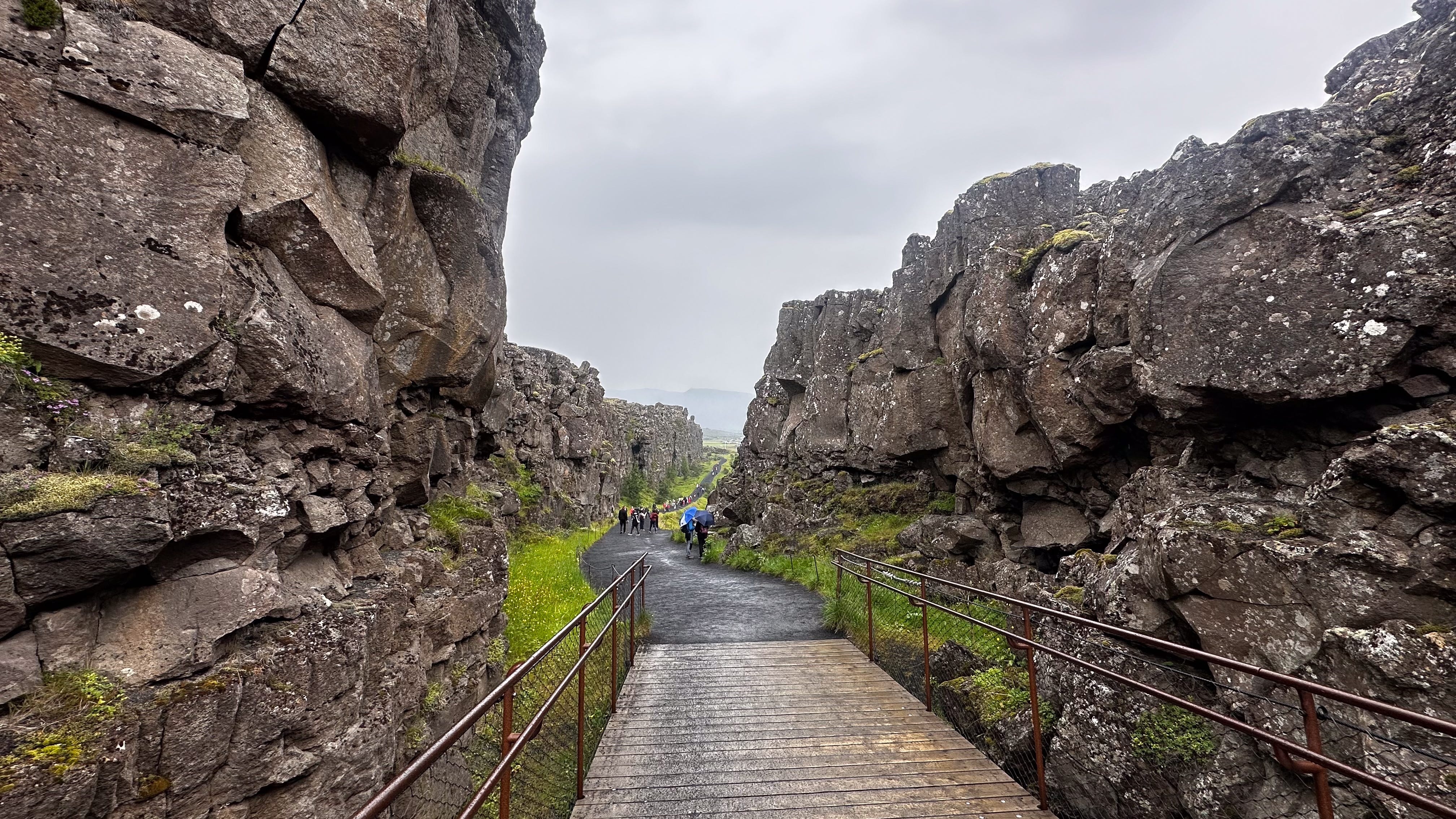
At Thingvellir, you can walk (or swim) between two tectonic plates. The North American and the Eurasian. The rift is real and visible: a crack in the earth wide enough to stand in, your left foot on one continent, your right foot on another. The Vikings held their parliament here over a thousand years ago. The geology was doing its thing long before that, and will long after. Standing in the gap, that's the thought you can't shake, how briefly any of us are here.
Midnight, but not dark
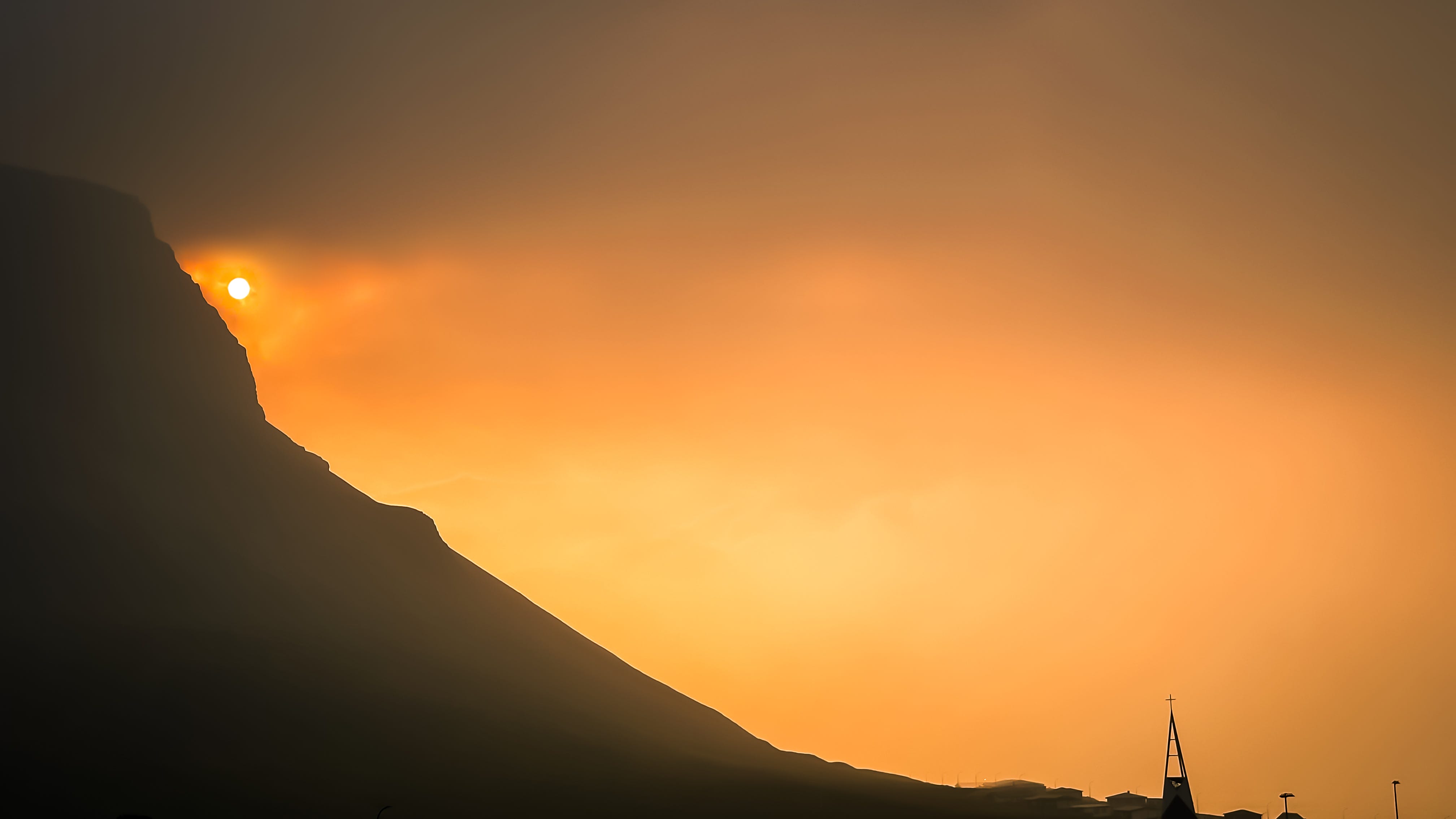
The thing about Iceland in July is the light never actually goes away. It gets low and golden and horizontal, and then it stays there, drifting between amber and rose and pale gold, for six hours before quietly becoming morning again.
Something from a myth
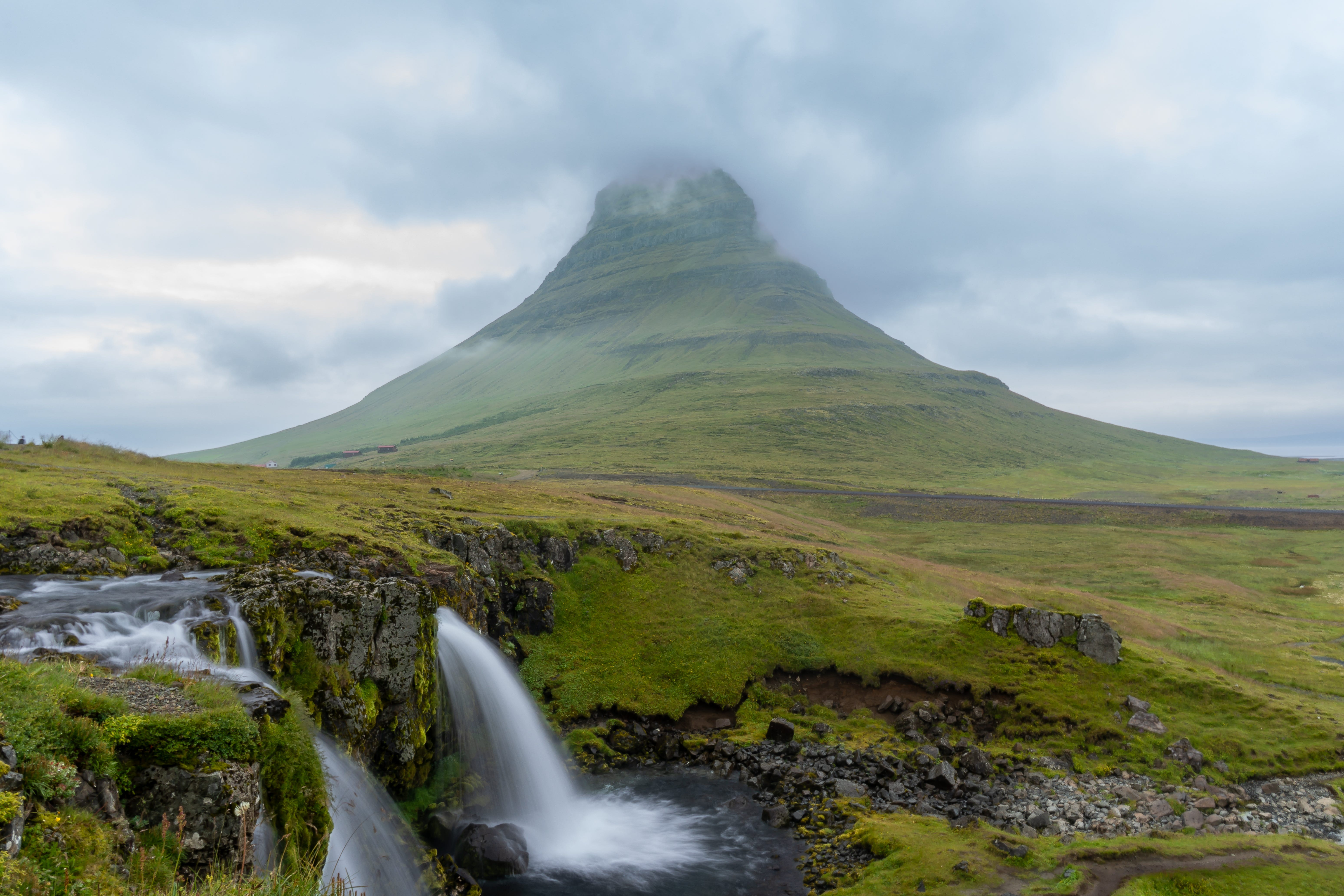
Snæfellsnes is where Iceland gets cinematic. The peninsula stretches out into the Atlantic like it’s pointing at something.
Kirkjufell, the mountain that looks like a witch’s hat, or something from a myth, stands alone near the coast, reflected in the water. We’d seen it in photographs a hundred times. In person, it’s more dramatic than that, and quieter.
Churches
Every small town has one, always in different proportions and style. No ornamentation. No grandeur. Just a building that says we are here against a landscape that could easily make you feel like no one is.


Very different ideas of what a church should look like. All of them unmistakably Icelandic, and each one with a story. Including Ingjaldshólskirkja which looks so much like the building you peer at through the optician's machine that we're convinced it's the same one.
Back on the ground
Iceland doesn’t do things by half.
The waterfalls are the loudest and the ones you can walk behind. The volcanoes are active. The whales actually show up. The glaciers are right there, and you can hold a piece of one in your hand, and it’s clear and ancient and cold in a way that ice from your freezer is not.
It is not a cheap place to go. It is not an easy place to go. It is absolutely worth going.
We’d go back. Winter next time, for the darkness, the northern lights, the hot springs steaming in snow. Different planet, different season.
Someone asked me what the best moment was. I still can’t pick one. That’s probably the answer.